The Dramatic Rise of the Penalty Shootout in Football

Share
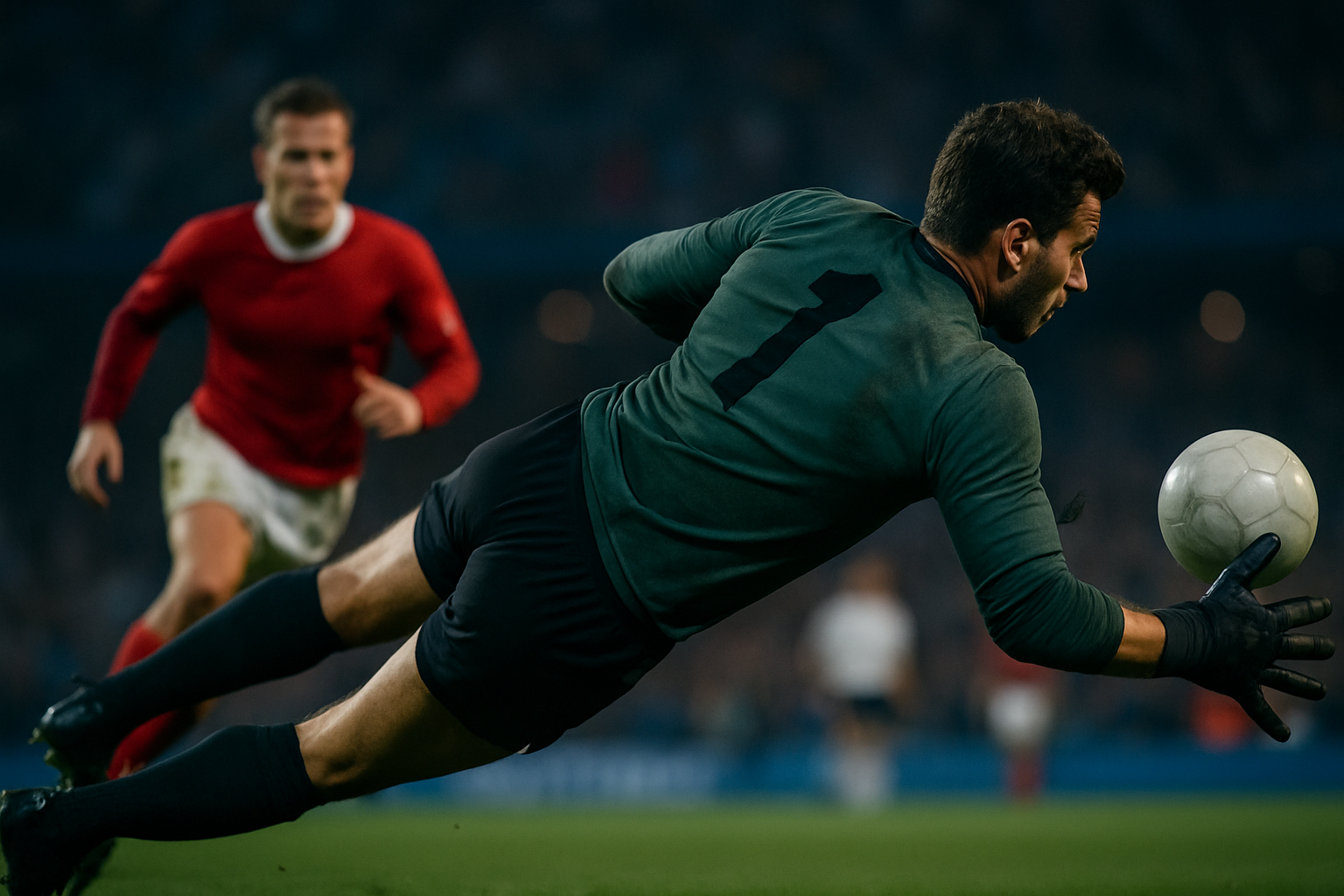
The Evolution of the penalty shootout in Football
In the realm of football, the methods used to resolve drawn matches have evolved significantly. Previously, knockout games that ended in draws were settled through replays, lots, or even the flip of a coin. However, the introduction of the penalty shootout has transformed how these deadlocks are resolved.
Key Highlights
- The first documented penalty shootout took place at the 1970 Watney Cup.
- Italy reached the final of the 1968 European Championship via a coin toss.
- Many teams still relied on replays until the 1990-91 FA Cup season introduced penalties.
- Ian McKechnie became the first goalkeeper to miss a penalty in a shootout.
The historical significance of the penalty shootout can be traced back to the 1968 European Championship. Italy advanced to the final after a successful heads-or-tails guess against the Soviet Union following a 0-0 stalemate. The subsequent final against Yugoslavia ended in a 1-1 draw, necessitating a replay, which Italy won 2-0. However, this method of settling draws was soon put under scrutiny.
Just a few months later, a controversial incident during the 1968 Olympics highlighted the need for change. Israel’s captain drew a piece of paper from a sombrero hat, indicating his team had lost to Bulgaria in the quarter-finals after a 1-1 draw. This sparked outrage within the Israeli Football Association, leading officials like Yosef Dagan to advocate for a more skill-based approach to deciding crucial matches.
Dagan, alongside Michael Almog, who would later become the Israel FA chief, developed the concept of a penalty shootout. In 1969, they presented a formal proposal to FIFA, emphasizing the need to replace the arbitrary system of drawing lots with a structured shootout involving five penalties per team. This proposal was eventually accepted by the International Football Association Board (IFAB) at their AGM in 1970.
Prior to the official adoption of the penalty shootout, various methods had been employed to resolve ties, from sharing titles to counting corners. Even domestic competitions had their versions of shootouts, although they were not universally accepted. A notable moment came when BBC Sport inquired whether the Watney Cup shootout was the first official instance, to which FIFA could not confirm or deny.
Despite the changes, many competitions continued to rely on replays well into the 1990s. It wasn’t until the 1990-91 FA Cup season that teams were allowed to settle drawn matches with penalties after extra time in a replay. The inaugural use of the penalty shootout in a professional match occurred later that same year during the Watney Cup.
As Hull City faced Manchester United in a nail-biting match, the atmosphere was electric. The match saw Hull take an early lead, only for United to equalize and push the game into extra time. As the players prepared for the shootout, feelings of excitement and apprehension filled the air. Everyone was aware that they were stepping into the annals of football history.
“I couldn’t believe it, my beloved Hull City were up against legends like Georgie Best and Bobby Charlton,” recalled a fan of Hull City. The tension was palpable as players prepared to take their penalties. Best became the first player to score, while Hull’s player-manager, Terry Neill, also scored, keeping the game tied. However, Manchester United’s Denis Law became the first player to miss a penalty in a shootout, saved by Hull’s Ian McKechnie, marking a new chapter in football history.
In an unexpected twist, McKechnie—initially a goalkeeper—stepped up to take a penalty himself, becoming the first keeper to miss in a shootout when his shot hit the crossbar. This moment has since become a part of football folklore, illustrating the unpredictable nature of shootouts.
Statistically, about 24% of penalties in shootouts are missed, a fact that underscores the pressure players face in these high-stakes situations. The penalty shootout has since played a decisive role in some of the biggest competitions, including the World Cup finals in 1994, 2006, and 2022. Furthermore, the first major international title decided by penalties occurred during the 1976 European Championship, introducing the now-famous Panenka shot.
Over the years, England’s national team has experienced a rollercoaster of emotions in shootouts, having lost seven times at major tournaments. Just recently, Wales’ World Cup hopes were dashed by Bosnia-Herzegovina in a tense shootout, a scenario all too familiar for football fans. Yet, it all began that night in Hull, where the fate of future matches would be forever altered.
As the players stepped up for their kicks that evening, each shot carried the weight of history. “Each kick was agony,” reflected one spectator, and even today, that sentiment remains true for many.