A Deep Dive into the Scottish Premiership Split Mechanics

Share
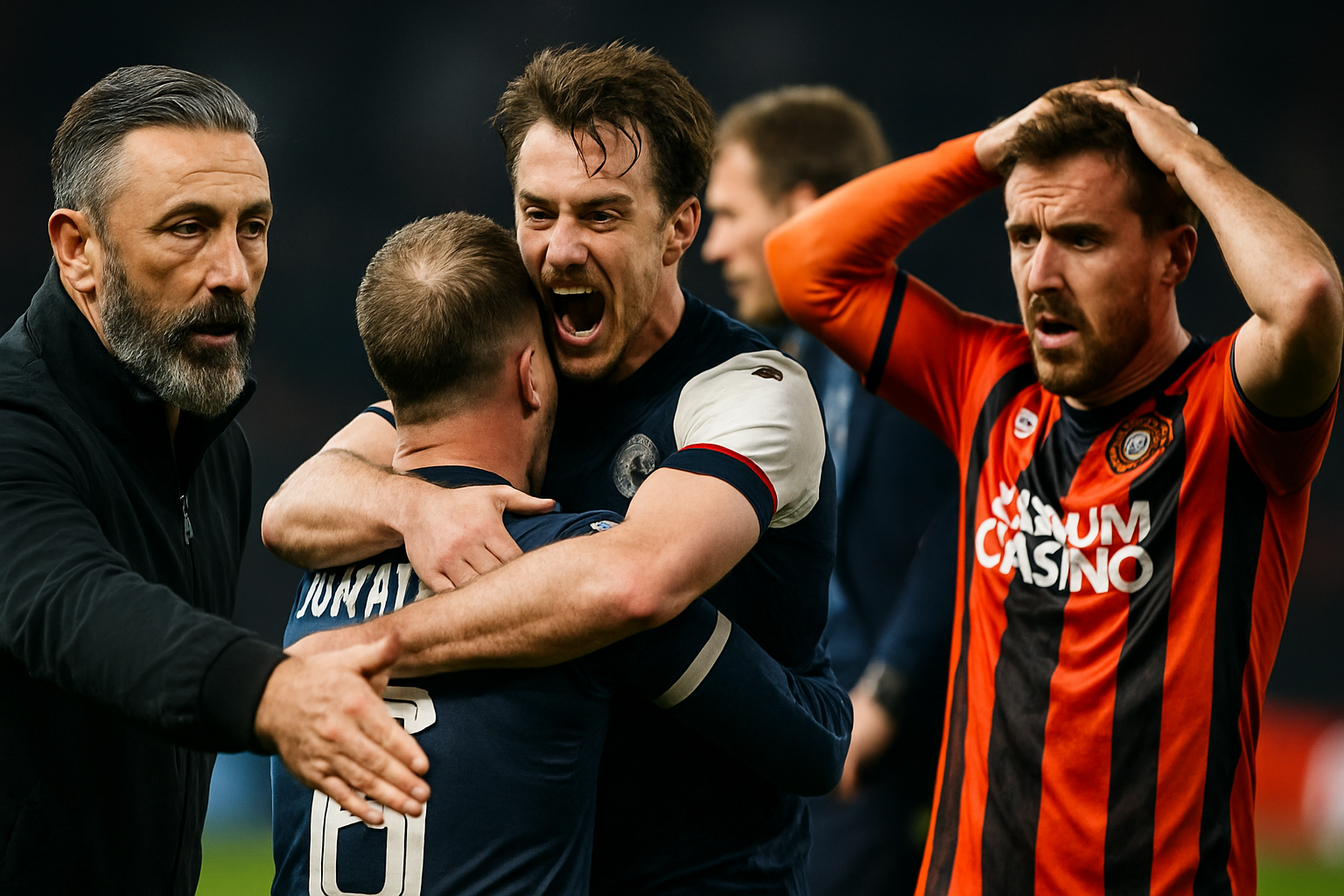
Understanding the Scottish Premiership Split
The Scottish Premiership has emerged as one of the most captivating leagues in Europe this season, with an intense title race that promises excitement as the league prepares to split into two sections. Hearts, Rangers, and Celtic are locked in a fierce battle for the championship, joined by Motherwell and Hibernian as they head into the final stretch of the season.
Key Highlights
- Hearts, Rangers, and Celtic are vying for the title.
- The split occurs after 33 matches, leading to a new format.
- Bottom teams face potential relegation and playoff challenges.
- Home and away game discrepancies create fan frustrations.
Newly-promoted Falkirk is also in contention, as Dundee United, currently in seventh, requires a significant points swing to overtake them. This league format, first introduced in the 2000-01 season, has its unique complexities.
So, how exactly does the split work? After all teams have played 33 matches, the league divides, with the top six teams competing for the championship and European spots, while the bottom six fight to avoid relegation. This means each team faces their closest competitors in a round-robin format, which intensifies the stakes.
However, the split introduces complications, particularly around home and away fixtures. At the start of the season, the SPFL cannot predict which teams will end up in which half of the table, making it a balancing act. Typically, teams will have an equal number of home and away games, but this is not always the case after the split.
For instance, Hearts, Rangers, Motherwell, and Falkirk will have played 17 home games by the 33rd round, while Celtic and Hibs will have played 16. This setup creates a headache for the league organizers, especially when addressing derby matches and the title race’s dynamics.
As we look at potential outcomes, it’s interesting to note that last season, seventh place had a higher points tally than both fifth and sixth positions, showcasing the unpredictability of the league.
The bottom half of the table currently features Dundee United, Dundee, Aberdeen, St Mirren, Kilmarnock, and Livingston. The stakes are high, as the last-placed team faces automatic relegation, while the 11th-placed team must survive a playoff against a Championship side to retain their Premiership status.
In the final games after the split, fans can expect a mix of excitement and tension as teams battle for survival and glory. Each game carries the weight of the season’s efforts, and the outcome will shape the narrative for next year.
Frequently Asked Questions
- What happens during the split in the Scottish Premiership?
The league divides into two halves, with the top six competing for the title and European spots, while the bottom six fight to avoid relegation. - How many games do teams play after the split?
Each team plays five additional matches against their closest rivals in their respective halves. - What are the relegation rules?
The last-placed team is automatically relegated, and the team in 11th place enters a playoff with a Championship team. - Can teams change halves after the split?
No, once the split occurs, teams remain in their designated halves for the remainder of the season.