AI’s Impact on Football: Navigating the New Digital Frontier

Share
The Rise of AI in Football: A Double-Edged Sword
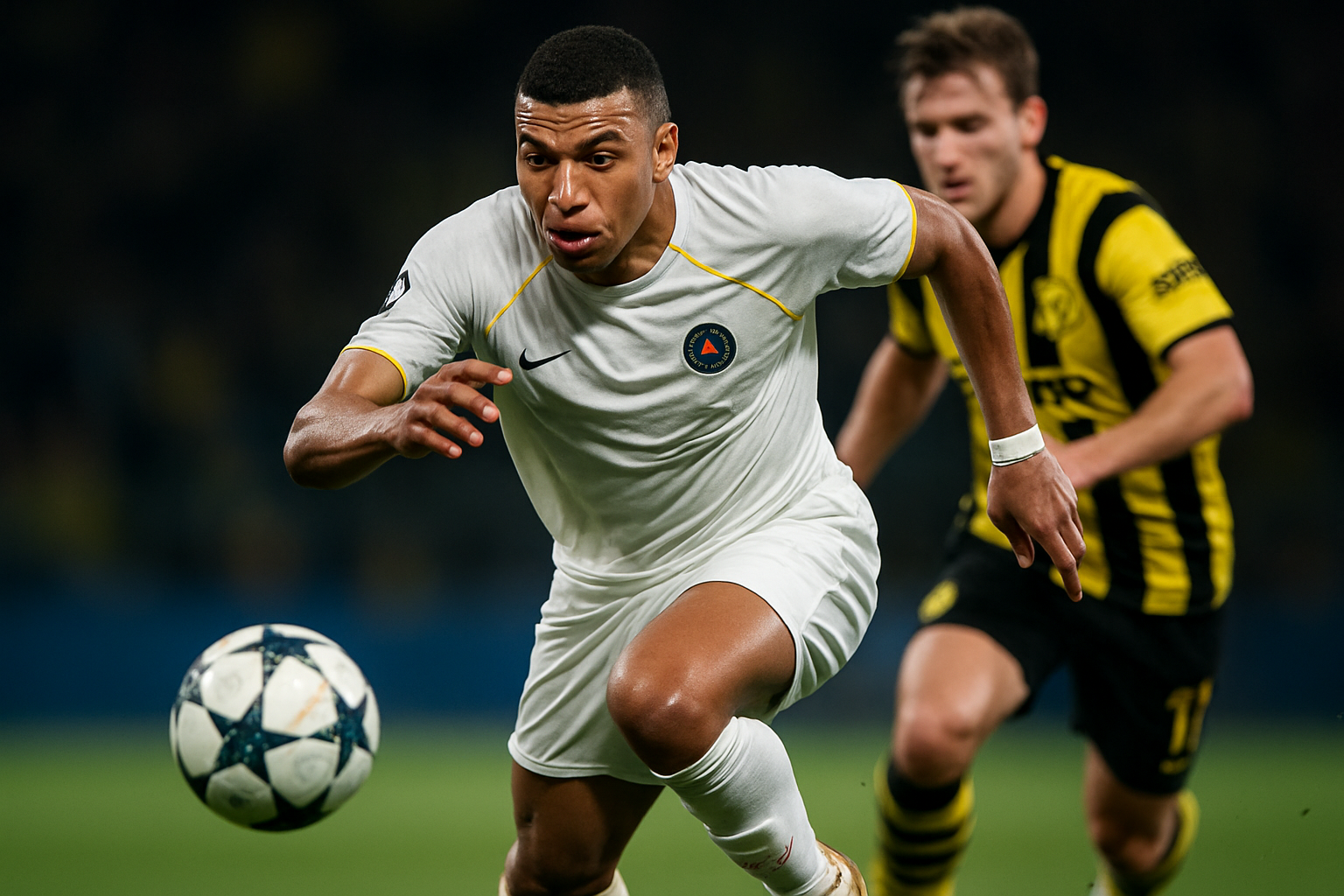
In today’s digital age, social media platforms overflow with images and videos of footballers in the most unexpected and often bizarre scenarios. Whether it’s Lionel Messi and Cristiano Ronaldo engaging in haircuts or Kylian Mbappe sharing a ski lift with a turtle, the boundaries of reality are being pushed further than ever.
Key Highlights
- AI-generated content blurs the line between reality and fiction.
- Players and clubs must protect their brands amid rising AI use.
- Legal challenges surrounding image rights are becoming increasingly complex.
- AI presents both opportunities and threats for footballers and clubs.
This bizarre phenomenon is a direct consequence of the rapid advancement of artificial intelligence (AI), specifically what’s termed as AI “slop”. These tools are not only becoming more sophisticated but also more accessible, making it increasingly difficult to distinguish between genuine content and deepfakes.
While many may see this as harmless entertainment—who really believes that Messi and Ronaldo have taken up burger flipping?—the implications for players and clubs are far more serious. As football transforms into a massive commercial enterprise, safeguarding one’s brand has become crucial. This includes protecting club crests and challenging unauthorized use of a player’s name in promotional materials.
Take, for instance, Chelsea’s Cole Palmer, who has trademarked the phrase “Cold Palmer” and his signature celebration. Such measures illustrate the lengths players are going to secure their images in this new AI landscape.
Yet, while creating protections is one aspect, navigating the onslaught of AI-generated content poses a different challenge altogether. In the UK, existing legislation on image rights is limited, leaving many players vulnerable. Jonty Cowan, a legal director at Wiggin LLP, highlights that AI introduces numerous challenges, prompting governments worldwide to contemplate how best to respond.
AI technology can place players in real-world scenarios or invent completely fabricated situations. For instance, during the January unveilings of Antoine Semenyo and Marc Guehi by Manchester City, AI images circulated depicting them signing contracts alongside manager Pep Guardiola. These images, while entirely fictional, were nearly indistinguishable from reality.
In another instance, an AI-generated image circulated of Manchester United’s head coach Michael Carrick with a fan known for his unique hair growth challenge. Although the event never took place, the realism of the image raised questions about the potential for reputational harm.
As Cowan notes, recourse for individuals is limited unless they can demonstrate commercial or reputational damage. The recent Data (Use and Access) Act criminalizes the creation and distribution of sexually explicit deepfakes, but the broader implications of AI-generated content remain largely unregulated.
Concerns extend to the concept of “passing off,” where individuals misuse a player’s likeness to promote products or services, misleading consumers and damaging established brands. In December 2024, as part of an AI consultation, the UK government may consider introducing personality rights, offering players more avenues to take legal action.
For clubs, various options exist to defend their interests. While social media users often create images of players in new kits, clubs can challenge potential trademark infringements. There’s a growing belief that fans recognize official channels as the sole source of authentic news and images, but as the lines blur, this perception may change.
While some clubs and players contemplate legal action against AI creators, the process can be lengthy and costly. Cowan suggests a more straightforward approach: addressing the platforms directly. The recently introduced Online Safety Act mandates that platforms tackle illegal content, which could lead to the development of mechanisms for quicker takedowns of unauthorized AI content.
As AI continues to evolve, it offers both opportunities and challenges. On one hand, it enables more accessible advertising without players needing to be physically present. On the other, unauthorized use of a player’s likeness can lead to detrimental outcomes. For example, Meta’s oversight board banned an AI-generated gambling app advertisement featuring a manipulated video of Ronaldo, emphasizing the need for platforms to implement stricter regulations.
Even national governing bodies like the Football Association have faced challenges. England’s head coach Gareth Southgate was recently targeted by fake AI-generated interviews during Euro 2024, showcasing the significant reach and impact of misleading content.
As we scroll through social media today, there is often no indication that content is AI-generated, despite community guidelines urging users to label such material. Cowan believes that while major changes to legislation may not be forthcoming, platforms could face stricter transparency requirements in the future.
For now, many clubs appear unconcerned, viewing AI as a mere social media phenomenon. However, as the landscape evolves, there may come a time when more decisive action is necessary.